Why a daily game can raise customer lifetime value
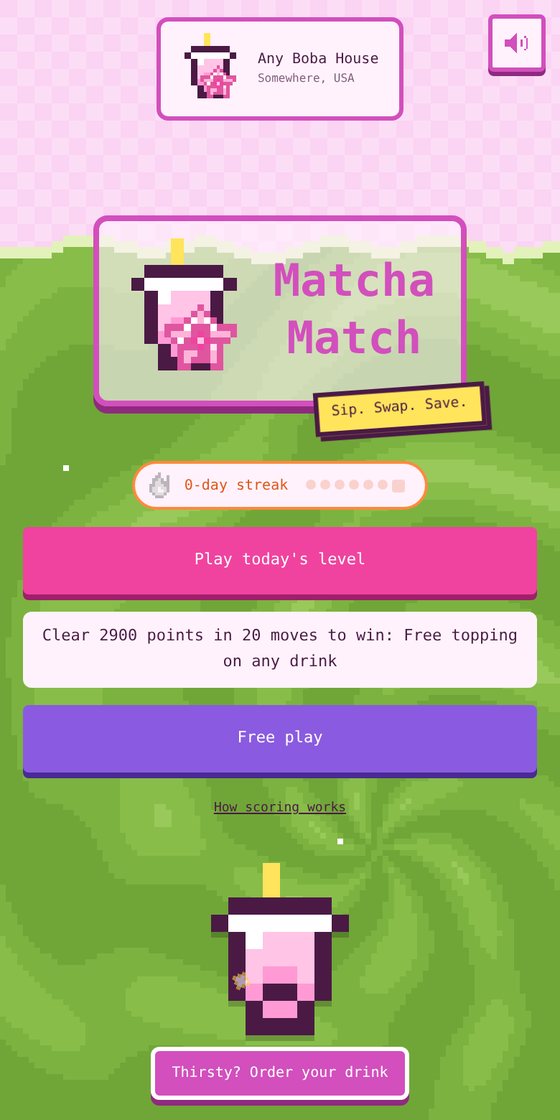
Most loyalty programs only work at the register. A stamp card does nothing between visits, and between visits is exactly when a customer drifts to the shop down the street. Matcha Match is built for that gap.
Read the full strategy
Customer lifetime value comes down to three things: how much someone spends per visit, how often they come back, and how long they stay a customer. A daily game can move all three without deep discounts.
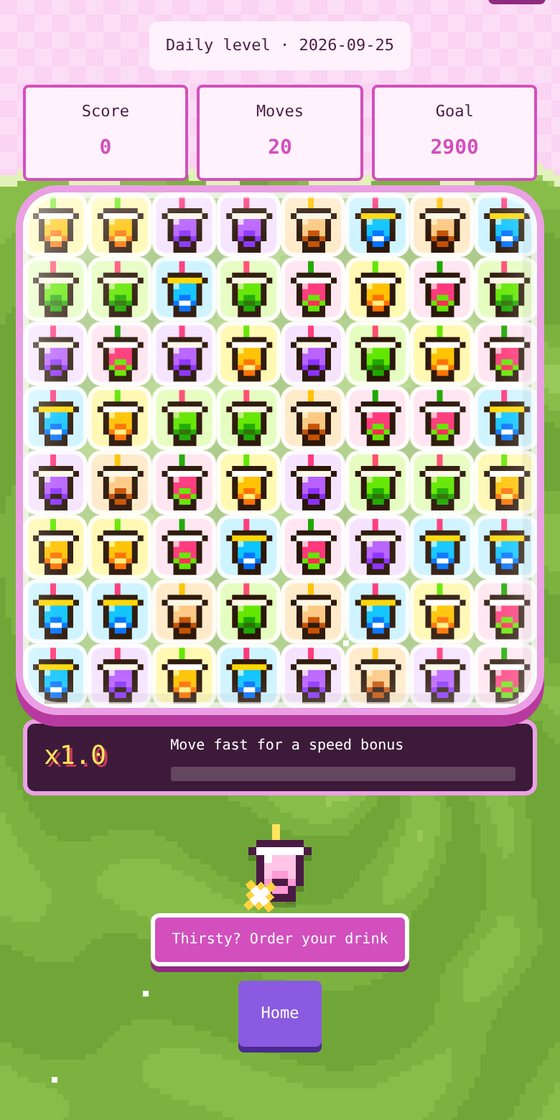
Frequency. There is one new level each day, the same for every player. Beat it and you unlock that day's reward, which only works today. That turns “I should get boba sometime” into a reason to stop in this afternoon.
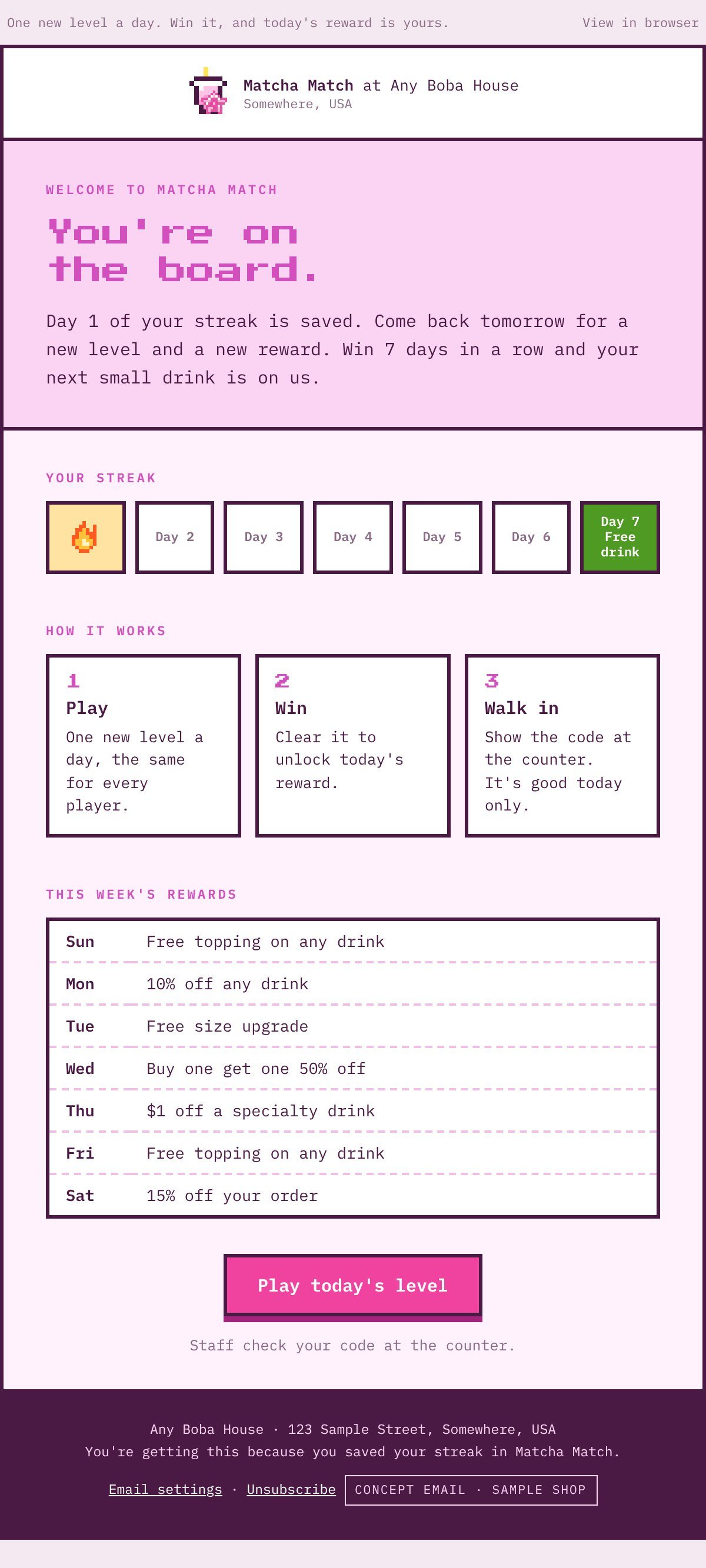
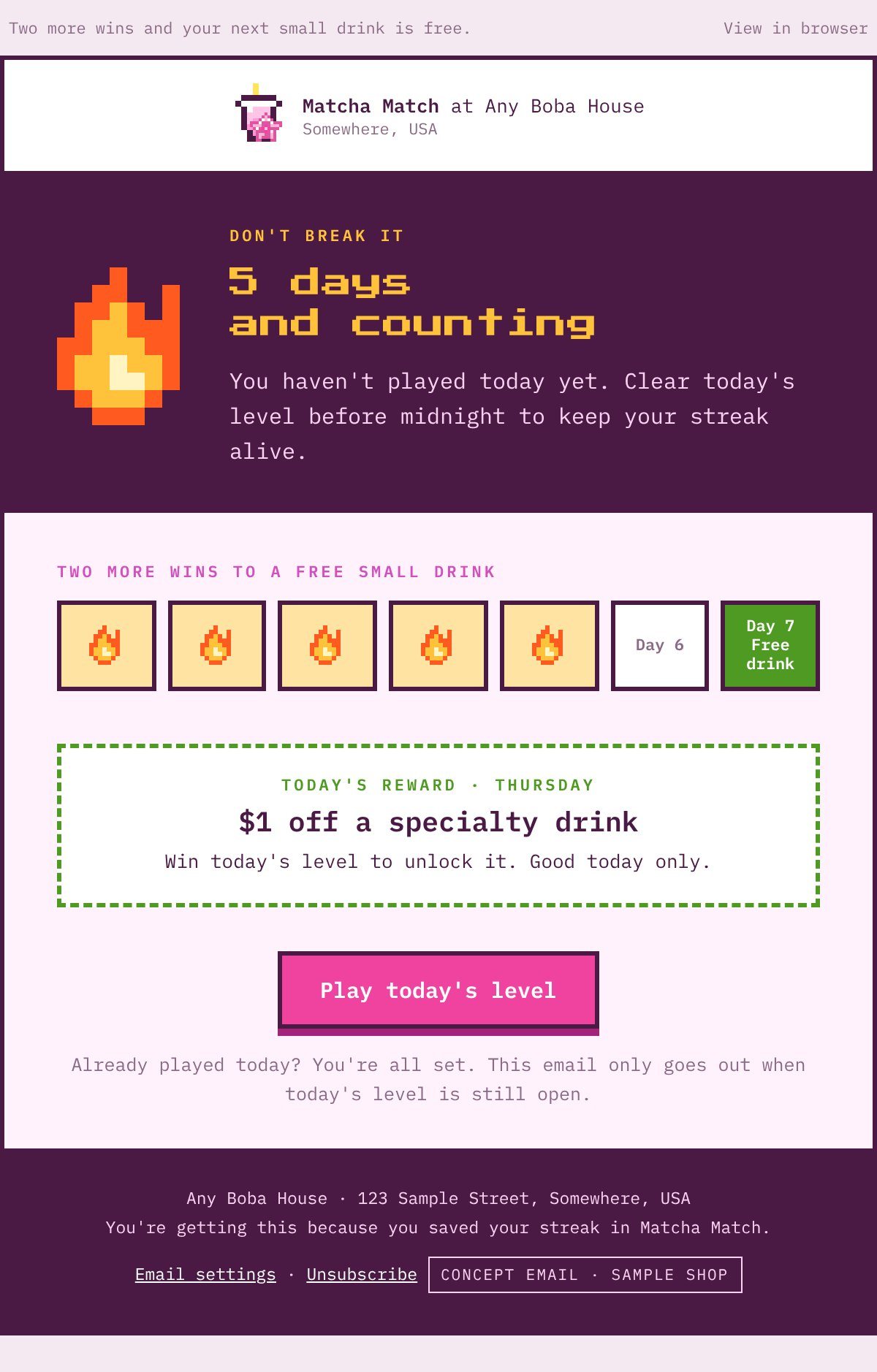
Retention. Win seven days in a row and the reward becomes a free small drink. The streak counter makes the habit visible, and nobody likes breaking a streak. It does the job of a stamp card, but it earns attention every day instead of once a week.
Order value. Rewards like a free topping or a size upgrade put people in front of add-ons they might never have tried. Once someone likes their drink with extra pearls, they're more likely to pay for them next time.
Acquisition. The share button posts a score card that doesn't give away the puzzle, the same format that made Wordle spread. Every share puts the shop's name in front of a friend at no media cost.
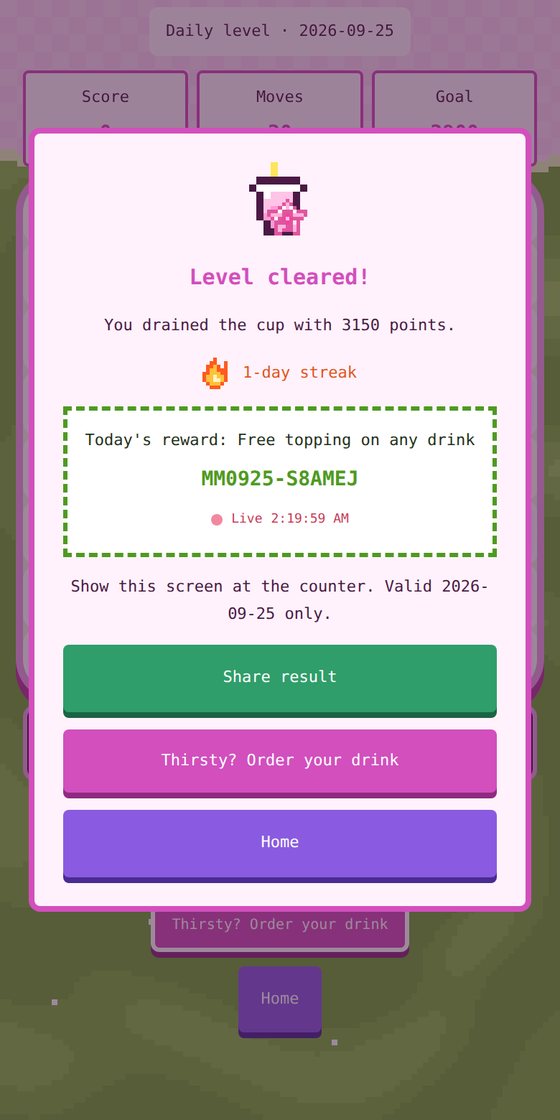
The shop keeps control of cost. Codes are tied to the date and checked at the counter, the reward screen shows a live clock so an old screenshot won't pass, and every offer lives in one editable list.
None of this is proven yet. The game hasn't run in a real shop, so the next step is a pilot with a clear scorecard (below) to see whether players actually visit more often than non-players.
 OG
OG Half Hearted
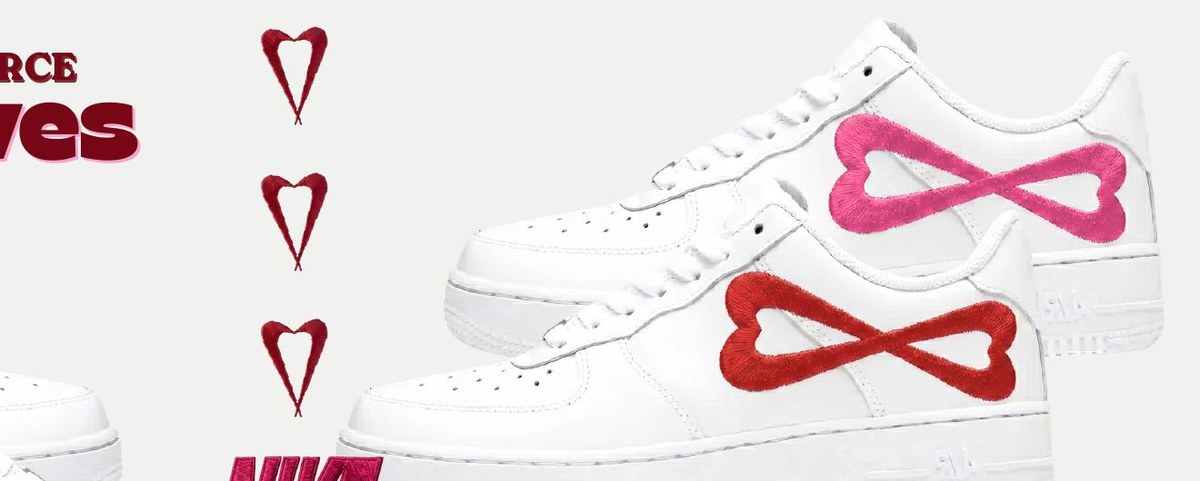 Infinity
 Flowers